seasonal fruit · Cucurbitacées
MelonCucumis melo
The melon is a delicious challenge for the Belgian gardener: it needs heat, sun and a little technique. Under a polytunnel, in a greenhouse or at the foot of a south-facing wall, an early variety will reward you in August with fragrant fruit, picked just right, far better than anything in the shops.
- Difficulty
- Demanding
- Exhibition
- Full sun, greenhouse or polytunnel
- Watering
- Moderate, at the base, with tepid water; reduced as the fruit ripens
- Floor
- Rich, humus-rich, warm, drained
- Spacing
- 80 cm to 1 m each way
- Harvest
- 90 to 110 days after sowing
Calendar · Belgian climate
When to sow, plant and harvest
| Activity | Jan | Feb | Mar | Apr | May | Jun | Jul | Aug | Sep | Oct | Nov | Dec |
|---|---|---|---|---|---|---|---|---|---|---|---|---|
| Sowing under cover | yes | yes | ||||||||||
| Plantation | yes | yes | ||||||||||
| Harvest | yes | yes |
Step by step
1Choosing
Choose early, small-fruited varieties bred for cool climates: Petit gris de Rennes, an old Breton melon, is the benchmark; Sweetheart F1, Emir F1 and Minnesota Midget ripen in 80 to 90 days. The classic Charentais types need a greenhouse. Prefer fresh seed, as germination falls off quickly; or buy plants in May grafted onto squash, more vigorous and resistant to soil-borne diseases.
2Planting
Sow under cover in the warm from mid-April, two seeds per pot at 25 °C, on a radiator or a heated mat; the seedlings appear within a week. Keep the strongest plant. Plant out at the end of May, after the Ice Saints, in soil enriched with mature compost and manure, under a polytunnel, in a greenhouse or at the foot of a wall, on a dark mulch or a tile that stores the heat. Space at 80 cm to 1 m.
3Caring
Pinching out makes the melon: cut the stem above the second leaf, then each secondary shoot above the third leaf, and finally the tertiary shoots two leaves beyond the fruit. Keep four to six fruits per plant. Water at the base, with tepid water, without wetting the leaves, and cut watering back sharply as soon as the fruits swell: the sugar depends on it. Set each fruit on a tile or a slate.
4Harvesting
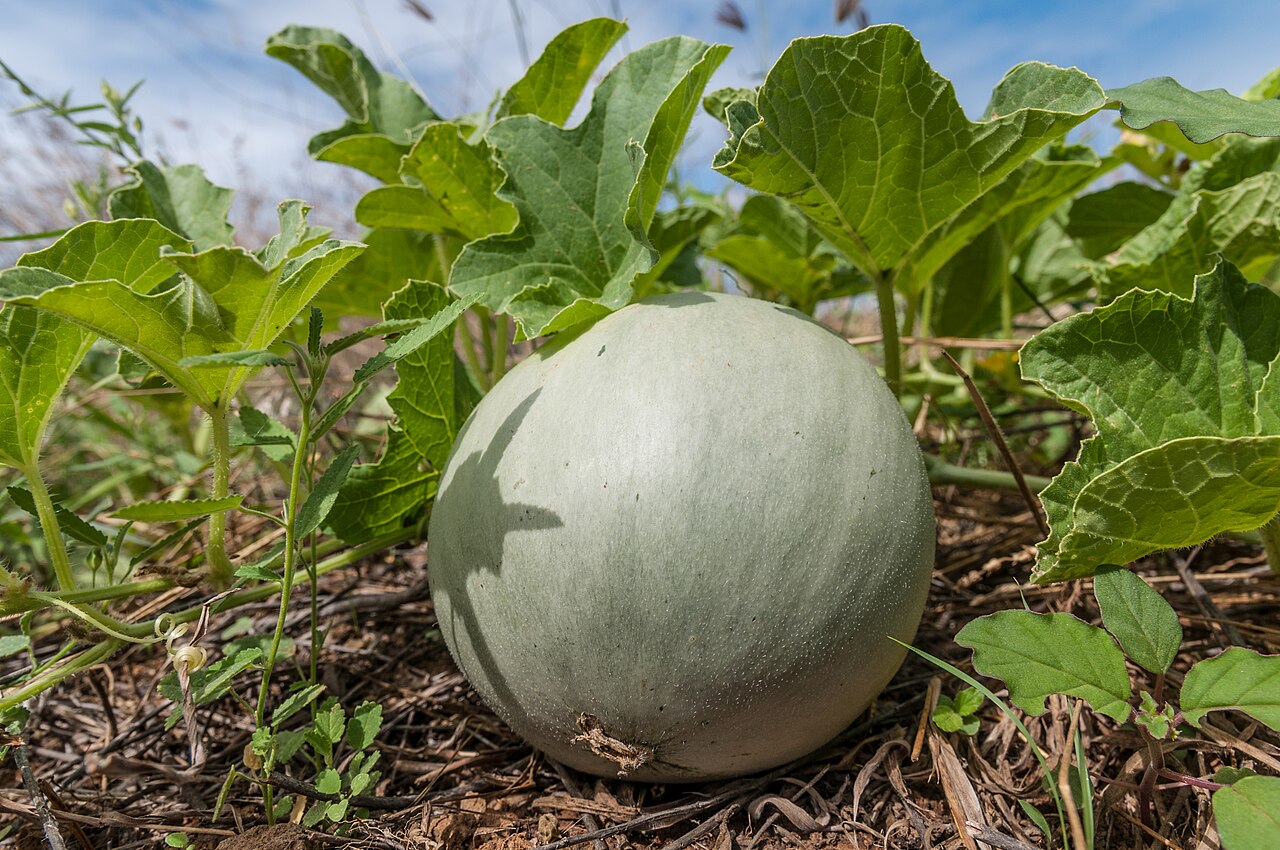
The melon is ripe when its scent fills the greenhouse, when the small leaf near the fruit yellows, when the stalk cracks in a circle and comes away under light pressure. The skin changes shade, from green to yellow or cream. Pick in the morning, with the stalk, and leave it a day in the kitchen if you like. In Belgium, the harvest runs from early August to mid-September.
5Storing
A whole melon keeps a week in a cool place, but not too cold, as the fridge kills its scent; once cut, wrap it in film and eat it within two days. The surplus turns into sorbet, into jam with lime, or into frozen balls for smoothies. The melon also goes with savoury salads, with ham, feta or mint.
Further reading
Planting and caring for plants properly
How to plant properly
Choosing the variety and the growing method
The melon is a tender annual that demands 25 °C by day and no less than 12 °C at night for three months: in Belgium, everything starts with the choice of an early variety and of shelter. Under glass or a polytunnel, an early Charentais such as Cézanne F1 or Anasta F1 succeeds; in a cold frame or in a sheltered open position, stick to quick small-fruited types, Petit gris de Rennes, Minnesota Midget, Sweetheart F1, Emir F1, which ripen in 80 to 90 days. Plants grafted onto squash, sold in May, tolerate cold soils and root diseases. An ungrafted plant is sown yourself; count on three or four plants for a family.
Sowing in the warm on the right date
Sow between 15 and 30 April, not before: a plant sown in March grows drawn on the windowsill and never makes up the lost ground. Set two seeds 1 cm deep in an 8 cm pot of seed compost, at 25 °C on a heated mat or above a radiator; germination takes five to eight days. As soon as they are up, give them the maximum light, at 20 °C, and keep the most vigorous plant. Water with tepid water, without excess, as damping off is waiting. In mid-May, harden the plants off by putting them out in the day under a fleece and bringing them in at night. A plant is ready when it has three or four true leaves.
Choosing the greenhouse, the polytunnel or the wall
An unheated greenhouse or a plastic polytunnel remains the guarantee: warmth, dry foliage, and a harvest three weeks earlier. Failing that, a cold frame or a mini polytunnel 60 cm high over a south-facing bed, opened by day and closed at night until July, is enough for the small varieties. In the open, only the foot of a south-facing wall, on soil mulched with black plastic or with slates that store heat, gives a chance in good years. Avoid any windy position. The melon follows a leek or a lettuce, never a squash, a cucumber or a courgette.
Preparing a warm, rich mound
The melon is hungry and likes its roots warm. Two weeks before planting, dig a hole 40 cm each way per plant, fill it with mature compost mixed with well-rotted manure, cover with 15 cm of fine soil to form a mound 20 cm high: the mound warms up faster and drains. Under glass, cover the bed with a black plastic mulch or a woven sheet that gains a few degrees, pierced at the position of each plant. Space at 80 cm to 1 m each way, 1 m along the row under a polytunnel. A flat tile laid beside each plant will take the future fruit.
Planting out after the Ice Saints
Plant between 20 May and 10 June, when the soil reaches 15 °C at a depth of 10 cm and the nights stay above 10 °C; under glass, from 10 May. Knock the plant out of the pot without breaking the rootball, as the melon hates being disturbed, and set the crown level with the soil, never lower, on the top of the mound. Water with tepid water, at the base, without wetting the crown, then set a cloche or a fleece over it for the first ten nights. Pinch out the stem above the second true leaf as soon as it takes, to start the first two shoots. Wait for overcast weather to plant, never a sunny midday.
In a pot or container
A melon can be grown in a 40-litre container on a south-facing balcony or in a greenhouse, with a single plant per container, a compact variety such as Minnesota Midget or Sweetheart F1, a mix of potting compost and garden compost in equal parts, and a stake or a trellis to train the stem. Sling each fruit in a net or an old stocking tied to the support to take the weight off the stem. Water every day in summer, with tepid water, with a liquid feed rich in potash every fortnight from fruit set. Limit to two or three fruits per plant. The container freezes and heats quickly: stand it on insulating blocks.
Beginner's mistakes
The first is sowing too early, in March, and planting out yellowed 30 cm stems that never get going. The second is skipping the pinching out and letting three metres of stem run away with flowers everywhere and two egg-sized fruits in October. Many also water over the leaves, in the evening, with cold water, and harvest powdery mildew and downy mildew. You still see melons planted 30 cm apart or in poor soil. Finally, not letting the soil dry out while the fruits swell gives watery melons, without scent, that split at the stalk.
Look after it properly
Watering with tepid water, at the base
The melon drinks a great deal while growing and almost nothing at the end of ripening. From planting to fruit set, water every two or three days, two litres per plant, with tepid water drawn from a butt in the sun, at the base and 10 cm from the crown, never over the leaves. A drip line or an upturned buried bottle makes regularity easier. While the fruits swell, keep to that rhythm. As soon as the fruit reaches its final size and starts to change shade, space the waterings out sharply, one a week, then stop ten days before harvest: that is when the sugar concentrates.
Mulching and feeding
Under glass as outside, a dark mulch on the soil holds the heat, keeps the moisture in and stops the fruits touching the earth: black plastic, woven sheet, or dry straw over soil already warmed up in June. The melon received everything at planting; top up only with diluted comfrey liquid, rich in potash, every fortnight from fruit set to colouring, or a liquid tomato feed. No nitrogen after planting, it gives leaves and delays the fruit. A handful of wood ash around each plant in June reinforces the potash.
Pinching out and training
Pinching out follows a simple logic: the female flowers are borne on the third-generation shoots. After planting, pinch the main stem above the second leaf: two secondary shoots start away. Pinch each of them above the third or fourth leaf: tertiary shoots appear, carrying the female flowers, recognisable by the small swelling below the flower. When a fruit sets and reaches the size of a walnut, pinch the shoot two leaves beyond the fruit. Keep four to six fruits per plant, well spread out, removing the others and the new shoots. Under glass, train vertically up strings to save space.
Making sure of pollination
In the open and under an open polytunnel, the bees and bumblebees do the work; open the greenhouse every morning once the flowers open. In a closed greenhouse or in cool, wet weather, pollinate by hand between 9 and 11 in the morning: pick a male flower, without a swelling below the petals, remove its petals and rub its stamens on the stigma of the female flowers, or pass a brush from one to the others. An unfertilised female flower yellows and drops within three days. Keep only the fruits set between 20 June and 20 July; those that set after the beginning of August will not have time to ripen.
Preventing diseases and pests
Powdery mildew, a white powder on the leaves from July, is unavoidable at the end of the season but is delayed by ventilation, watering at the base and sprays of wettable sulphur or milk diluted to 10 % every ten days. Downy mildew and anthracnose come from wet leaves and cold nights: close the greenhouse at night, never wet the foliage. Aphids are treated with soft soap. Slugs attack the young plants and the fruits on the ground: a tile under each fruit, beer traps, night-time collecting. Under glass, red spider mite thrives in dry weather: damp down the floor, not the leaves, and release predatory mites.
Through the season
Mid-April, sow in the warm. Early May, prepare the mound and the mulch, harden the plants off. Around 20 May, plant out and pinch for the first time. In June, pinch the secondary shoots, water every two days, pollinate if needed, lay the tiles. Early July, select four to six fruits, comfrey liquid, turn the fruits a quarter turn each week to colour them evenly. Late July, reduce the water on the first fruits, treat powdery mildew with milk. In August, harvest, stop watering ten days before each picking, remove the new flowers. Early September, last harvest; pull up and compost the healthy plants.
Harvesting and storing
The signs of ripeness add up: the scent, noticeable as soon as you step into the greenhouse, a circular crack around the stalk, the yellowing of the small leaf facing the fruit, a shade that turns from green to yellow or cream between the ribs, and a fruit that comes away under light pressure from the thumb. A melon picked too early stays bland, it sweetens no further after harvest, even if it softens. Harvest in the morning, with the stalk, and lay the fruit in a single layer. Keep for a week in a cool room at 12 °C, never whole in the fridge, which kills the aroma; once cut, wrap in film and eat within two days.
Obtaining seeds or seedlings
Seeds and seedlings: where to find them
A selection of reputable seed suppliers that deliver to your country, listed in order of proximity. Evadya does not receive any commission: these are suppliers we recommend for their reliability.
Semailles
For Belgian artisan seed producer, organic and reproducible seeds, over 250 regional varieties, a planting calendar tailored to the Belgian climate.
Against Small organisation: limited range of hybrid varieties and possible stock shortages during peak season.
Search for ‘melon’ on SemaillesKokopelli
For Europe’s largest collection of heirloom, organic and open-pollinated varieties; comprehensive growing guides.
Against No hybrids or seedlings; delivery times can sometimes be long during peak season; prices are slightly higher.
View the shopFerme de Sainte Marthe
For A long-established organic seed supplier, offering seeds and young plants, heirloom varieties, and nutrition and recipe guides.
Against Dispatched from the Loire: postage charges to Belgium and Switzerland; plants are fragile in transit.
Search for ‘melon’ on Ferme de Sainte MartheGraines Baumaux
For A vast selection (over 500 tomato varieties), with high-yielding F1 hybrids and heirloom varieties side by side, and plants available in season.
Against Not much organic produce; an old site; catalogue entries rather than growing guides.
Search for ‘melon’ on Graines BaumauxVreeken’s Zaden
For A very wide range of Dutch products, competitive prices, and numerous varieties suited to the Benelux climate.
Against Website in Dutch only; limited selection of organic produce.
Search for ‘melon’ on Vreeken’s ZadenDe Bolster
For Dutch organic seed producer, seeds suitable for propagation, a good selection for cool climates.
Against A shorter catalogue; website in Dutch.
Search for ‘melon’ on De BolsterZollinger Bio
For Swiss organic seeds, varieties suited to high altitudes and microclimates, and a unique phenological calendar.
Against Swiss prices and customs charges from the European Union.
Search for ‘melon’ on Zollinger BioBingenheimer Saatgut
For A leading German name in organic and biodynamic produce, offering open-pollinated varieties selected for the home gardener.
Against Website in German; delivery charges apply outside Germany.
Search for ‘melon’ on Bingenheimer SaatgutDreschflegel
For A collective of organic growers, specialising in rare and regional varieties, and the preservation of traditional farm seeds.
Against Small quantities; a catalogue that’s more activist than practical; website in German.
Search for ‘melon’ on DreschflegelFrom the vegetable patch to the plate
And then we savour it
What it offers
Very rich in water, the melon supplies beta-carotene, vitamin C and potassium for few calories.
In the kitchen, it’s simple
Melon balls, Ardenne ham and a few mint leaves: the summer starter that needs no cooking at all.
Living well
Succeeding with a melon in Belgium is the quiet pride you share as you cut it in front of your guests.
Also worth a look