climbing fruit · Actinidiacées
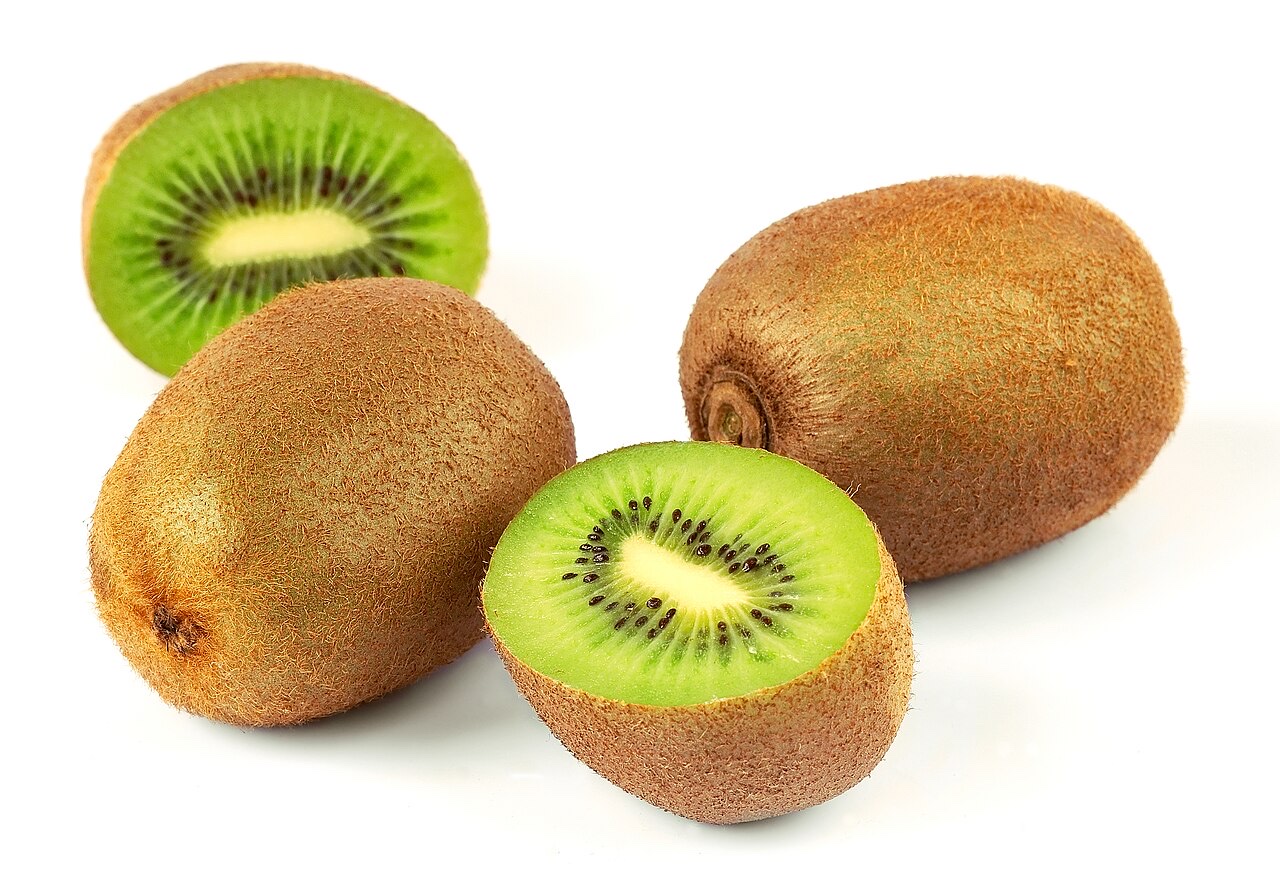
KiwiActinidia deliciosa
The kiwi, a vigorous climber originally from China, is happy on our walls and pergolas without needing a glasshouse: it wants room, patience and a male and female pair. Once under way, it delivers tens of kilos of fruit in November that keep all winter.
- Difficulty
- Intermediate
- Exhibition
- Sun, south- or west-facing wall, sheltered from wind
- Watering
- Plentiful in summer, soil always moist
- Floor
- Deep, rich, moist, drained, lime-free
- Spacing
- 3 to 4 m between plants
- Harvest
- 4 to 6 years after planting (2 to 3 years for the kiwiberry)
Calendar · Belgian climate
When to sow, plant and harvest
| Activity | Jan | Feb | Mar | Apr | May | Jun | Jul | Aug | Sep | Oct | Nov | Dec |
|---|---|---|---|---|---|---|---|---|---|---|---|---|
| Plantation | yes | yes | yes | yes | ||||||||
| Harvest | yes | yes |
Step by step
1Choosing
Hayward, the variety sold in the shops, is the most reliable: it is a female plant, to be paired with a male such as Tomuri or Atlas, one male plant for five females. Self-fertile varieties such as Jenny or Solissimo simplify the small garden, but give smaller fruit. The kiwiberry, Actinidia arguta, with smooth fruit the size of a plum, is eaten skin and all, withstands -25 °C and ripens earlier: Issai is self-fertile. Buy container-grown plants labelled by sex.
2Planting
Plant in spring, after the last frosts, or in October in a sheltered position, against a south- or west-facing wall, a pergola, a sturdy fence: the mature climber is heavy. Loosen a deep, moist, rich, lime-free soil and enrich it with compost. Space females and male 3 to 4 m apart, with the male in the middle. Put up a structure of wires stretched at 1.8 m straight away and mulch generously.
3Caring
The kiwi drinks a great deal in summer: water regularly for the first five years, as its large leaves wilt quickly. It is pruned in January, before the sap rises: train a single trunk and two horizontal arms, then shorten the fruiting laterals every year to three or four buds beyond the last fruit. In summer, pinch back over-long shoots. Protect the young plant from late frosts with a fleece in April.
4Harvesting
The fruit is picked in late October or in November, still firm, before severe frosts: the kiwi tolerates -2 °C and no more. Test ripeness by cutting a fruit open, the seeds should be black. Pick them all at once, in dry weather, detaching them with a sharp tug. A mature female plant gives 30 to 60 kg. Kiwiberries, on the other hand, are picked ripe, in September, when they soften.
5Storing
Kiwis picked firm keep three to four months in a cold cellar, between 2 and 5 °C, in shallow crates, and several weeks in the salad drawer. To ripen a few, put them at room temperature next to apples, which give off ethylene. The kiwiberry, more fragile, keeps two weeks in a cool place. Jam, chutney and dried fruit use up the surplus of a good year.
Further reading
Planting and caring for plants properly
How to plant properly
Choosing the varieties and making up the pair
The kiwi is dioecious: except for self-fertile varieties, you need a female that carries the fruit and a male that supplies the pollen. Hayward, the standard female, flowers late, at the end of May, and goes with Tomuri or Atlas, late males; Bruno and Abbott, earlier, match Matua. One male pollinates five to eight females within a radius of 5 m. The self-fertile Jenny and Solissimo produce on their own, but with smaller fruit, and always do better alongside a male. The kiwiberry, Actinidia arguta, hardier and earlier, comes as the females Geneva, Ken's Red or Weiki, with an arguta male, and as the self-fertile Issai.
Choosing the spot and building the support
The climber wants sun, a south- or west-facing wall, and above all shelter from the wind that tears its large leaves and snaps the young shoots. Its May flowers have nothing to fear from frost, but its April shoots are scorched at -1 °C: avoid frost pockets. Provide the permanent support before planting, because a mature kiwi weighs several hundred kilos: posts 10 cm square set 2 m high, every 4 m, joined by three 3 mm steel wires, or a pergola in structural timber. Against a wall, wires on eyes set 15 cm out are enough. Space at 3 to 4 m.
Preparing the hole and the soil
The kiwi wants a deep, rich, moist and slightly acid soil, pH 5.5 to 6.5: it goes chlorotic on chalky soil and rots in waterlogged ground. Dig a pit 80 cm square and 60 cm deep, loosen the bottom and work in three spadefuls of mature compost, one of leaf mould or composted bark, and a handful of hoof and horn. On heavy soil, plant on a 20 cm mound with coarse sand; on chalky soil, be generous with pine bark and plan on a permanent acid mulch. The kiwi likes neither salt nor chlorine: alongside a salted road, choose another spot.
Planting in spring
Plant preferably in April, after the hard frosts, a container-grown plant of two or three years whose sex is guaranteed by the label; seedlings do not fruit for seven years and their sex stays unknown. Soak the rootball, tease it out, set the crown at soil level, male in the middle of the group of females. Fill in, firm, water with 20 litres, mulch over a metre. Keep a single stem only, cut back to 30 cm above a vigorous bud, tied to a vertical stake that will lead it up to the wires: this will be the trunk. Planting in October is possible in a very sheltered position, with protection at the base.
In a pot or container
The Hayward kiwi is too vigorous for a pot; keep the container for the self-fertile Jenny or Solissimo, or better still for the Issai kiwiberry, more compact and ready to produce from the third year. Take a container of at least 80 litres, a mix of garden soil, potting compost and garden compost over a drainage bed, and a sturdy 1.8 m trellis. The weak point is water: the large leaves demand daily watering in summer, failing which they scorch at the edges. Feed in April and June, prune short in January and in summer, repot every three years. Expect a few dozen fruits per container.
Beginner's mistakes
The first is to buy a single kiwi that is not self-fertile, or two females, and to wait ten years for fruit that will never come. The second is to under-size the support: a pergola built of 3 cm battens collapses in the fifth year. Many people plant on chalky or waterlogged soil, where the climber yellows and stands still, or in full wind, where it tears itself. You also see kiwis left unpruned, an impenetrable bush that flowers little. Finally, letting a young shoot run in April without a fleece, then watching it blacken in one frosty night, costs a year; keep the fleece to hand until the Ice Saints.
Look after it properly
Watering generously
The kiwi is the thirstiest plant in the fruit garden: its large leaves transpire enormously and its fleshy roots are shallow. For the first five years, water twice a week in dry weather, 20 to 30 litres each time, from April to September; once mature, a generous weekly watering in summer is still needed, especially against a wall. A shortage of water shows quickly: leaves hanging at midday, scorched edges, small fruit. But standing water kills the roots: water slowly on drained soil. A drip line under the mulch, two hours every other day in July, settles the question.
Mulching and feeding
A thick 10 cm mulch of wood chippings, dead leaves or pine bark, over 1.5 m across, keeps the essential moisture and maintains the acidity. The kiwi is hungry: in March, spread a barrowload of mature compost for two plants, topped up with a handful of hoof and horn; in June, diluted nettle liquid stimulates growth. Avoid concentrated mineral fertilisers and fresh manure, which burn the roots, and any feeding after July, which would stop the wood ripening before winter. On chalky soil, a handful of granular sulphur in spring and a chelated iron dressing in case of chlorosis.
Forming the trunk and the arms, then pruning
In the first year, lead a single stem up the stake to the wires, pinching out every lateral; once it reaches 1.8 m, cut it back just above the wire: two opposite shoots will form the horizontal arms, laid along the central wire. In the second and third years, let fruiting laterals grow on these arms every 30 to 40 cm, tied in on the outer wires. From then on, every January, outside frosty spells and before the bleeding starts, prune each lateral that has fruited to three or four buds beyond the last fruit, and renew exhausted laterals every three years by cutting them back to a new shoot near the arm. The fruit is borne on the first buds of the year's shoots, which come from one-year-old wood.
Controlling the growth in summer
Without summer pruning, a kiwi produces 5 m of stems that wind round everything. From June to August, pinch the fruiting shoots five or six leaves beyond the last fruit, remove the water shoots that spring from the trunk and the arms, and cut the stems that twist round the wires: coiled stems strangle the branches and hold damp. Thin in June to one fruit every 10 cm if the crop is excessive, and the fruit left will double in size. Open up the foliage around the clusters of fruit so that the sun colours the flesh and builds the sugar. Tie in the new laterals with soft ties.
Protecting from frost and pests
The mature wood of the kiwi withstands -15 °C, but the young spring shoots freeze at -1 °C and the crown of a young plant suffers below -8 °C. For the first three winters, earth up the base by 30 cm with soil or dry straw and wrap the trunk in hessian. In April, keep a winter fleece ready to lay over the shoots in the evening on a clear night. The kiwi has almost no diseases in Belgium; PSA bacterial canker, feared in commercial orchards, is prevented by avoiding wounds in damp weather. Cats like to roll in the scented roots of young plants: wire netting at the base protects them. Birds take no interest in the fruit.
Through the season
In January, prune outside frosty spells. In March, compost, mulch, remove the winter protection gradually. In April, watch for frosts and fleece the young shoots, remove the water shoots on the trunk. In May, the creamy white flowering perfumes the garden; let the bees do their work, spray nothing. In June, thin, pinch, begin the generous watering. In July-August, water, pinch again, cut the stems that coil round. In September, stop all feeding, pick the kiwiberries. In late October or November, harvest the kiwis before the hard frosts, then gather up the leaves and earth up the base of young plants again.
Harvesting and storing
The kiwi is picked firm, all at once, in late October or November, as soon as a frost of -2 °C is forecast or the leaves start to yellow; a fruit frozen on the plant goes soft and rots. Cut a test fruit open: black seeds and bright green flesh mean the moment has come, and the sugar will go on rising in the cellar. Detach each fruit with a sharp upward tug, without pulling off the stalk, and set it down without knocking it. Store in shallow crates in a cold, airy cellar, away from apples, which would ripen them too quickly; bring the fruit you mean to eat into the kitchen ten days ahead, with an apple to speed things up.
Obtaining seeds or seedlings
Seeds and seedlings: where to find them
When choosing a fruit tree or shrub, opt for a nursery near you: they stock rootstocks and varieties suited to the local climate, and can advise you on pollination. In Belgium, look for varieties from the Gembloux Research Centre (RGF label); in France, nurseries in the ‘Croqueurs de pommes’ network; elsewhere, collections of regional varieties.
From the vegetable patch to the plate
And then we savour it
What it offers
The kiwi is one of the fruits richest in vitamin C, with a good supply of fibre and potassium.
In the kitchen, it’s simple
Cut in two and eaten with a teaspoon at breakfast, or sliced on a pavlova: the kiwi needs nothing added.
Living well
Opening the cellar in February and still finding kiwis from the garden is summer carried through to the following spring.
Also worth a look